Waste Management Laws In The Usa

The Resource Conservation and Recovery Act (RCRA) is the law that requires the United States to establish a solid waste management program within their borders.

The purpose of the program is to manage solid waste while also protecting human health and the environment. There are specific standards that states must meet in order to achieve this goal through their solid waste management programs.

These standards cover a wide range of topics, such as landfill design and operation, waste minimization and recycling, proper handling and disposal of hazardous chemical wastes, dumpster rentals ans transportation of solid waste and the inspection of solid waste facilities. The EPA (Environmental Protection Agency) has the responsibility of enforcing the RCRA standards and through various means, monitors the states to help ensure they are meeting these standards.

What Are The US Laws For Handling Toxic Waste

All hazardous waste must be properly stored, transported and disposed according to federal, state and local regulations. You must identify, classify, and label all hazardous waste generated within your business.

There are also many federal, and local regulations that apply to specific types of waste, such as flammable liquids, radioactive materials, and medical waste. The Division of Waste Management is a subdivision of the Environment Protection Agency that deals with the disposal and management of hazardous wastes.

It is important to review the most recently amended regulations before handling any hazardous waste. Proper management, labeling and disposal of hazardous wastes will protect human health and the environment. You should always get a license before you start to handle and dispose hazardous waste. You should call your local waste management office for guidelines and procedures for handling hazardous waste. You can also get a dumpster rental for proper waste management.

Factories Must Have A Waste Management Plan

All factories in the United states must have a waste management plan for the waste they produce. It is a requirement by law. This has been made possible by the EPA to create awareness and control pollution. It is a federal law that all businesses must follow. These businesses must hire a company that can manage the waste material and make sure it is disposed of in a legal and safe way.

According to waste management experts in Little Rock, there are many businesses that offer dumpster rentals. If you find yourself needing a dumpster, then it would be a good idea to contact one of these companies. They will be able to handle any business waste material for you. Many people don’t think about this, but if you do some business with waste removal tasks, you are furthering yourself from the law. If you don’t follow this law, then you can be fined heavily.

Waste Management Services In The USA

In the United States, they have many waste management companies. However, the most commonly used services for waste management are dumpster rental, waste disposal, and trash clean up.

Dumpster rental is a great way to handle your waste, because it is cost effective and convenient. In most cases, a dumpster rental service will come to your location and pick up the waste from your business, home, or school.

This waste is then taken to a landfill or other location to be recycled, reused, or disposed of. It might cost a little more money to have the dumpster rental company remove the waste than you would have to pay to dispose of it yourself, but the convenience and time efficiency are worth the money!

What Are The Benefits Of Waste Management Laws In The USA

As for the benefits of waste management laws in the USA, these are there to make sure that the waste management industry is operating safely according to the guidelines and regulations. In other words, these will ensure that the waste management system is in place and working efficiently.

The main purpose of such laws is to regulate the way in which waste is collected, handled, re-used and recycled. In the United States, the federal government regulates the interstate shipment of hazardous waste. By making everything mandatory, they make sure that the entire system is working to its optimum level. All the waste that gets dumped and collected will be recycled or disposed of in accordance with the norms and guidelines, to best protect the enviromnemnt and human lives.

The Benefits Of Solar Energy

Even though you’re familiar with the fact that solar energy is beneficial to the environment, have you ever thought why or how this is so? The goal of this blog is to provide you with a better understanding of the environmental advantages of solar energy.

Benefits Of Solar Energy To The Environment

There are a plethora of various reasons why solar energy was so beneficial. Solar has various financial advantages, such as the ability to save money by lowering your electric bill, among other things. There are a number of additional advantages and benefits to consider. Some people simply enjoy the concept of living in a more environmentally friendly and energy-independent manner.

Reduces Air Pollution

Fossil fuels emit a large number of pollutants. If you’ve ever traveled to California, New York, or any other location where the terrain is characterized by mountains and valleys, you saw the pollution.

In addition to being detrimental to the environment and health, smog and polluted air are detrimental to our appearance. When contaminants become trapped in air, everything appears to be worse

Solar panels contribute to the reduction of air pollution. It is your solar panels’ responsibility to generate clean energy that does not add to air pollution.

Reduce Water Usage

If your energy source does not run on fossil fuels, it is very certainly reliant on some form of water as a source of power to function. Hydropower & nuclear energy both use large amounts of water to generate their respective amounts of electricity. When it comes to controlling water flow and energy production, a dam is frequently needed to achieve this goal. As a dam is built, it will have a tremendous effect on a local ecosystem.

Solar panels generate energy without using any water or having a detrimental influence on the environment. In fact, according to the United States of Energy Efficiency and Renewable Energy (EERE), solar energy systems have the potential to reduce water usage in at least thirty six US states.

Reduces Dependence On Nonrenewable Energy Sources

Some individuals prefer solar energy since it is environmentally friendly and allows them to be more self-sufficient in terms of energy. Solar energy, on the other hand, has the potential to reduce our reliance on nonrenewable energy resources like fossil fuels. This is fantastic for a variety of reasons.

That is because nonrenewable energy resources are responsible for a large proportion of the pollutants that have a negative influence on the air quality. In order to benefit both the environment & the species, the sooner and more thoroughly you can convert to renewable energy.

Improves Humanity’s Health In The Long-Run

The previous discussion focused on the belief that the solar energy system might help us alleviate water shortages. However, in the same report, the US Office of Renewable Energy & Energy Efficiency asserts that clean air may be beneficial to mankind’s health as a whole. We might potentially save more than 25,000 lives a year, according to the experts’ estimates. This is due to the fact that cleaner air leads to cleaner lungs.

Helps Fight Climate Change

Climate change is a serious issue to consider. The ongoing release of pollutants and more CO2 into the atmosphere has a negative impact on our environment. In turn, it makes it increasingly difficult for the environment to purify the air.

The ability to retain heat from the sun will grow as carbon count rises. Temperatures around the world will continue to rise and fall as the shifting air conditions have an impact on the climates of different regions

People can use solar energy to try to slow down the effects of global warming. In order to slow climate change, they can all reduce our CO2 emissions and put out less pollution.

Benefits Of Using Solar Energy

Reduce Your Energy Bill

Because you are generating your own electricity with solar panels, you will be consuming less electricity from your utility provider. This will immediately result in a reduction in your energy bill.

In addition, you can earn money by selling any unused electricity that you generate back to the power grid for it to be consumed by other users. You may make your investment even more profitable by taking advantage of solar panel grants that are available.

Energy Production During Peak Hours

The value of electricity generated at peak times is higher than the value of electricity generated at night. Because of the additional electrical input provided by solar energy, costs during those time periods could be brought down to levels comparable to those seen during night hours.

Solar Energy Is Usable Throughout The World

Solar power can be used nearly anywhere. This is especially useful in places where there is no other source of electricity. There are a lot of people who don’t have electricity.

Independent solar systems may be installed in those areas, which would enhance the lives of many people in the process. Furthermore, solar energy can be used to power spacecraft and boats.

Improves Grid Security

When there are a large number of power plants that are geographically dispersed, the grid is less sensitive to blackouts. There are many energy production centers that are widely distributed throughout a grid that has a high penetration of solar power. This increases the reliability of a grid in the event of an overload, a natural disaster, or a human-caused calamity.

Waste Management in the USA

The objective of waste management research is to study the measures developed by local authorities to encourage households to adopt pro-environmental behavior. Such approach articulates two complementary approaches.

On the one hand, from an economic approach, we can analyze the choices of local authorities to encourage users of the household waste disposal service to throw less waste. In this context, we can develop a typology of action levers developed by local authorities. Four different types of user involvement strategies have been identified with American local authorities, describing combinations of specific measures to achieve the environmental objectives set by the national waste policy.

Then, from an econometric study, we can highlight the importance in the choices of local authorities of taking into account the characteristics of users, a policy being all the more effective when the users of the service are ready to implement it.

On the other hand, from an approach in human and social sciences, we observe a fairly complex relationship between the user and the waste management service, as well as sorting practices that are firmly rooted in the daily lives of individuals.

Household Waste

Household waste is waste resulting from the activity of households in their homes. They are not recovered or processed in the same facilities, and must therefore be collected separately.

Assimilated Waste

This is waste produced in small quantities by professionals (companies, craftsmen, shops, associations, etc.) and administrations, which can be collected at the same time as residual household waste (waste assimilated to household waste) due to its nature.

Waste Collection

The waste collection service is organized either door-to-door or on a voluntary basis, possibly using specialized waste disposal services like Junk Empire.

Door-to-door collection means that a container (bin, dumpster, etc.) is assigned to a user or a group of users, and that it is collected at home or in the immediate vicinity of the place of production.

Voluntary contribution means that the container is made available in a space accessible to all users.

The organizing authority for the collection of household and similar waste is responsible for defining the conditions of application of the public service available to residents and other service users. This is the main purpose of the collection policy.

Collection regulations are based on the different types of waste as described below:

  • Residual household waste
  • Residual household waste is thrown into garbage bags which are placed in the bins …
  • Recyclable household packaging; household packaging must be discarded in bulk and without bag: either in the wheeled bins …
  • Glass
  • Glass jars, flasks, jars and bottles should be disposed of loose and uncapped in …
  • Bulky items
  • Bulky items are too heavy or too bulky waste to be collected in bins. They …
  • Green waste
  • Green waste is recoverable waste and should not be mixed with bulky and …
  • Waste electrical and electronic equipment (WEEE); WEEE is hazardous waste that fits into a specific recovery process, …
  • Waste from household, DIY or gardening activities; dangerous for people or the environment, they cannot be collected with garbage …

The waste reception center is a fitted out, guarded, fenced area where individuals (and in some cases, professionals) can bring waste which, due to their nature, quantity, size, weight or dangerousness, cannot be collected at the same time than household garbage. Users deposit their waste in specific containers for recycling, recovery or treatment.

How to start a plumbing business

Plumbing is not what it used to be, and it can be a very lucrative business if handled properly. The key for success is to know how to find leads while providing quality work. Regarding leads, managing your online presence is definitely a crucial part in becoming a leading brand.

A water leak, blocked toilets, a radiator that no longer works by – 3 ° outside … a hard blow that can happen to anyone, at any time and deprive us of our modern comfort! If the plumber is the professional to contact in these cases, his mission is not limited to troubleshooting. Indeed, its role is also to provide drinking water, heating and air conditioning in offices, buildings and public places.

The job of a plumber

A specialist in sanitary installations, the plumber works in an industrial environment as well as in individual houses or collective establishments, whether for renovation work on old buildings or installations in new constructions.

The plumber assembles, repairs and maintains the water and gas pipes upstream and downstream of the devices themselves. It also carries out the installation and repair of sanitary appliances: bathtub, water heater, meter, taps.

Business description

Today, the plumber is not only the professional who is urgently called to repair a water leak. He also works on many other types of sites: installation of sanitary equipment, installation of swimming pool and spa, installation of heating system … Water, gas, the plumber masters all these installations! The plumber or plumber works according to the plans provided to him.

Its missions consist of:

  • Installing the pipes (water, gas, fuel, wood, solar energy). To do this, he studies the distribution and location of devices from the architect’s plans. It traces the course of the pipes along the walls and floors. He drills the necessary holes for laying pipes, shapes the piping by cutting tubes to the necessary dimensions and assembles them.
  • Checking for leaks and insulation once the pipes are installed.
  • Installing sanitary ware and make electrical connections for those who need it: bathtub, water heater, meter, taps, sink, radiators, boilers, etc.
  • Ensuring the adjustment and maintenance of all these devices.
  • Carrying out repairs: water leaks, disgorging pipes, unblocking septic tanks, troubleshooting a water heater, a boiler, repairing faucets, replacing defective devices

Often the plumbing contractor has a dual skill: plumber-heating engineer, plumber-thermal installer (he then takes care of the installation and maintenance of boilers and, increasingly, solar panels) or even plumber-roofer-zinc worker (for the installation of gutters, downspouts and generally to participate in the waterproofing of roofs). After a few years of practice, the plumber can progress to a position of site manager or work supervisor. He can also set up on his own, as a craftsman installer or repairman.

He traces the route of the pipes along the walls and partitions. He shapes the piping by cutting tubes to the desired dimensions. It welds them together or connects them to a heater or sanitary equipment, for example. He checks that the system is working properly and that there are no leaks. He installs plumbing fixtures, radiators and boilers in the places best suited to their use. It ensures the adjustment and maintenance of all these installations. He also performs many repairs and repairs to the homes of individuals.

The plumber most often works on a construction site, sheltered from the elements. Depending on the importance of the work, he works alone or in a team. The plumber’s job requires good physical condition because the plumber often operates in uncomfortable postures and sometimes carries and handles heavy loads. He may be required to work on Saturdays and on certain public holidays, often in an emergency, which therefore requires some availability.

Required qualities of a plumber

  • Precision and manual skill: The plumber is required to handle machines and assemble fragile materials. To carry out work on delicate parts, he must therefore be meticulous, careful and have good manual dexterity.
  • Availability: Often called upon for emergency repairs, the plumber can be called anytime. He must therefore be flexible in his schedules and availability (evening, weekend, public holiday).
  • Relational sense: If he works alone for an individual, the plumber must be able to explain his interventions and advise his client. If he is on a construction site, he collaborates with other colleagues (other pipefitters, electricians, masons etc.). In all cases, he must be able to communicate with ease.
  • Autonomy and sense of initiative: Each installation is different and the breakdowns are just as varied and sometimes even unprecedented. The plumber must therefore show adaptability, initiative and resourcefulness to assess the importance of the work to be undertaken, to choose the best repair technique, sometimes in an emergency.
  • Good form and physical resistance: If he works most often indoors and therefore does not suffer from inclement weather like other construction professionals, the plumber must nevertheless adopt uncomfortable working positions and for example twist to repair pipes which are difficult to access. He is also required to transport heavy parts such as boilers.

The plumber works as an employee in a sanitary or building plumbing company or in a company offering various specialties: roofing, thermal, zinc, sanitary, climatic … The driver’s license is essential to travel on the roads or construction sites. He can work on his own as a craftsman-installer or repairman before starting his own business.

Plumbing is one of the most popular specialties in the building industry. There are over 115,000 plumbing companies in the United States. And it can be very profitable if implemented in conjunction with a good marketing strategy.

Gaining 20/20 vision on the road to sustainability: Powering Ontario’s prosperity

Why should you care about Ontario’s energy system?

You are a taxpaying, socially responsible citizen – what makes energy any concern of yours as long as it keeps your lights on, TV on, laptop running and your WIFI working?
 
Let’s talk food for a second to help draw a parallel to why energy matters, especially regarding where and how we produce it and use it. Most of us care about local, organic food because we know that: 

  • it is healthier for our bodies and our kids;
  • our neighbour runs the shop that we buy it from and by buying there we support jobs in our neighbourhood; 
  • the food is coming from nearby and adds fewer carbon and other nasty emissions thanks to reduced transportation; 
  • less food waste occurs;
  • our community is more prosperous because our dollars are circulating and being re-invested locally. 

Living sustainably, buying locally, being “green” – this kind of awareness has become mainstream in economically, socially, and environmentally progressive rural and urban communities across Ontario.

In the same way, a distributed, integrated energy system bolsters prosperity in each community that hosts, partners, owns, and enables sustainable energy, resulting in both individual benefit for all of us as local citizens and for the province as a whole. 

The energy system – including our corner gas stations, the gas lines underfoot, our furnaces, among others – is integral to our economy, good jobs, community resilience, health, and future prosperity. 

“OSEA is enlisting the powerful knowledge of local people like you and industry leaders from the sector to share insights and envision a 20/20 Roadmap to a more prosperous province powered, heated and cooled, and moved by sustainable energy.”

Since 2008, when the economic downturn hit and our automotive sector floundered, we have seen billions invested in sustainable energy by citizens, communities, local and international companies, and our province. This investment has created good jobs for our youth and workers who were displaced by global forces in the construction sector, as solar and wind technicians, smart grid and district energy experts, waste management and recycling specialists, energy efficiency specialists, among other new local employment opportunities. 

Communities and their utilities across the province are becoming hosts, partners, proponents, and enablers of energy efficiency, smart grid solutions, district energy systems, solar, wind, energy storage, and other forward looking improvements like renting a dumpster.  Small municipalities like Brant County have installed solar projects that will create 45 full-time jobs and contribute 1.5 million dollars to the country and province in federal and provincial taxes over the course of twenty years. 

Markham has built out its district energy system, and its solar programs have resulted in more than $300,000 in non-tax based revenue annually for the municipality.  Toronto is investing in storage, district energy solutions, solar, bio-energy and grid upgrades.  M’Chigeeng First Nation has erected two turbines, becoming the first 100% First Nations owned wind project.  These are just a few exciting examples of local leadership!

Our local communities are doing great things!  As Canadians, we are also making great progress.  In fact, in sustainable energy investment we rank in the top four countries in the world, according to last year’s REN21 Global Status Report. Ontario with its Feed-in tariff and conservation programs enabled much of this development by empowering individuals as well as the community, public, and private sectors to become conservers and prosumers as opposed to just consumers. 

But our work is not done. As antiquated power plants reach the end of their lives and a significant portion of our infrastructure needs to be upgraded in the next five to ten years, we at the Ontario Sustainable Energy Association (OSEA) believe we need to identify portfolios of smart, firm, and flexible distributed sustainable energy projects in our communities across Ontario.

We need to look for ways to increase efficiency and effectiveness through the integration of our energy system’s electricity, heating and cooling, and transportation components.  We need to ensure that our leading communities continue to push the agenda as good hosts, partners, proponents, and enablers of these solutions, demonstrating the benefits that come to those who seize the opportunity.   

OSEA is enlisting the powerful knowledge of local people like you and industry leaders from the sector to share insights and envision a 20/20 Roadmap to a more prosperous province powered, heated and cooled, and moved by sustainable energy. You are invited to join us as a member, participate in our upcoming All-Energy Canada conference on April 9th and 10th and our province-wide showcase of sustainable energy during Green Energy Doors Open on October 4th 2021.


Together we can build a thriving sustainable energy sector to power Ontario’s prosperity with good jobs, resilient communities, and healthy environments. Regardless of your political affiliations, a flourishing, prosperous, and healthy Ontario remains within our reach if we work together with our neighbours and care about the choices that we make about energy.

FIFA 21 and the vision of Trip Hawkins

FIFA from EA

Founded in 1982, Electronic Arts (also known as EA) is a veteran of the video gaming industry based in California. Developer and publisher, they have worked on most existing media, from the Commodore 64 from its beginnings to the PlayStation 2, via the Super NES and of course the PC. However, it was with the Megadrive in the early 90s that its sales really exploded.

EA passion for sports

EA was founded by Trip Hawkins (estimated net worth $120 million). In his youth, he loved the board games published by Strat-O-Matic. He founded his first business by borrowing money from his father, an executive in the aerospace industry. After discovering IT, he dreams of developing video games. He obtained an MBA from Stanford University after getting an undergraduate degree from Harvard.

To understand the very foundation of Electronic Arts, and their appetite for sports licensing, one has to go back to the early days of Trip Hawkins.

A period in his life when, like many kids, Hawkins was passionate about sports and a huge fan of Strat-O-Matic board games. His sweet tooth? The Football version, which simulates the game of American football. Each player’s statistics are collected, analyzed, and then converted into numerical results that reflect each player’s production for a given year.

These numerical results are placed on a deck of cards, with each team having their own deck. The formula was brilliant for the time. Nevertheless it had one big flaw: its complex shape which can easily be put off. But that all changed when Hawkins began to take an interest in the first computers in the late 70’s, as he recounted in an interview:

“Yeah, things like D&D (Dungeons and Dragons) are famous for being geeky that way. It’s just not everyone’s cup of tea. I was just thinking about it, realizing, “Man, it’s a really special experience to be so mentally engaged.” But not everyone can navigate it. It’s just too much work to make this thing work. That’s when, as soon as I heard about computers, I could sort of see it with my own eyes, “That’s how we do it. We’re basically going to put all the administrative running stuff. in a box. And I’m going to put some pretty pictures on the screen like a television. “

This touches on the most basic definition of video game, although he was not its inventor. But Hawkins is enjoying a time when technology was booming, and despite his young age, his project was already taking shape in his head: “I immediately started sketching it out and I’m like, okay. How long will it take for the cost of hardware to go down, the number of stores to go up, and the number of machines and houses to be big enough for you to make money selling games? That’s when I realized that I could probably get there by 1982, seven years later, and that’s exactly what I did. ” But between 1975 and 1982, the young man traveled quite a bit.

A seven year plan

To put his seven-year project into action, Trip Hawkins must first achieve three things: make a name for himself, learn to run a business and, above all, make contacts.

He did this through Harvard and Stanford Universities, from which he graduated from both. This gave him access, not without effort, to his first job at Apple, after having negotiated his recruitment directly with the late Steve Jobs! This is how he cut his teeth, and rose through the ranks to become marketing director for the Apple brand. But, as expected, Apple was only a step for Hawkins who decided to step off ship in 1982, as outlined in his initial plan. At that point, he preferred to stand on his own feet. He uses all of his stock options to found his own company: Electronic Arts.

And guess what he used to make his first game? American football, his first love!

To achieve this, his first big move was to hire John Madden (then NFL coach) as a spokesperson and consultant for his future game, which culminated in the popular Madden NFL series. Hawkins thus realized his childhood dream, by even managing to recover the licenses of the American league.

With the success of the series, and the money starting to flow into Electronic Arts, Hawkins was even starting to replicate the process in other sports. Prior to his final departure from the company he founded in 1994, Electronic Arts launched a game of NHL (ice hockey), PGA Tour (golf game), FIFA Football and NBA Live.

So many licenses that span the ages – proof with the release of FIFA 21 on October 9 – in addition to increasing the punching power of EA, which can now release games of all types, with significant success. Without this little childhood dream, maybe sports fans would never have been able to indulge in it from the couch.

EA became one of the first companies in the gaming industry and was marked by popularizing the people who worked on games, especially designers and programmers. The initial down payment was generated entirely at the expense of Trip Hawkins’ personal savings and amounted to $ 200,000. At that time, the company was known as Amazin’ Software.

EA online gaming publisher

Originally, EA was the only game publisher. In the 1980s, the company began to develop media for console games. Soon, the publisher acquired several successful developers. In the early 2000s, EA grew into one of the biggest publishing houses and took 3rd place.

In 1988, the company released John Madden Football, a game which marks the starting point of what we can call the EA method and which will be applied to all its sports simulations (hockey, basketball or even football), through the intermediary of ‘EA Sports.

This consists in releasing the same product every year, sufficiently modified (and generally improved), to make it a full-fledged game. Besides sport, the titles developed by EA are more specific, we can cite for example the series Need For Speed, Road Rash, Wing Commander, or the series of Strike (Desert Strike, Jungle Strike, etc …).

But what makes Electronic Arts so powerful is its publishing activity. In addition to outright buyouts, like those of Bullfrog Productions or Westwood Studios, it has distribution contracts with a bunch of development studios, making an impressive list both in quality and quantity. We can cite, for example, Accolade, DreamWorks Interactive, Novalogic, Cryo Interactive, Disney, Infogrames, Interplay Productions or even Square Soft, with which they have set up a joint venture, Square Electronic Arts.

Currently, the best EA products are sports games distributed under the EA Sports logo, games based on the licenses of popular films such as Harry Potter and games in the long-running series like Need for Speed, FIFA, Medal of Honor, The Sims, Battlefield and games like Burnout and the Command & Conquer series. EA is also the distributor of the Rock Band series.

With $ 5.15 billion in revenue for fiscal year 2018 and more than 9,300 employees worldwide, Electronic Arts is definitely one of the giants of the video game industry, and probably for some time to come. They are currently the number 9 video gaming company in the world, behind giants like Microsoft, Sony and Apple which dominate the market.

How to Be a Marketing Rock Star During Annual Strategy Planning

As summer fades away and pumpkin spice lattes roll into town, one thing is certain – it’s time to begin your annual marketing strategy sessions for the coming year. In the most basic context, strategy is defining what your company wants to achieve and developing a plan to watch it come to fruition.

According to CarCover.com, this is especially true for e-commerce sites in the automotive and transportation markets in these uncertain times. The pandemic has dramatically changed customers’ habits, how they drive their cars, how they travel, and consequently how they make related purchases online.

Anytime you set out to achieve a goal you can schedule time to reflect and meditate on it. You need space to clear your mind and visualize the big picture behind the goal. The same is true when it comes to strategy planning. There are many benefits to having a solid strategy in order, but we advise taking a chunk of time to reflect before even jotting anything down on paper.

Effective planning ensures team alignment. The objectives are clear, which allows for everyone to prioritize their workload. This allows for the best use of resources across your team, particularly the time your employees are spending on projects. Once your team is focused on what matters the most, your company will see the results they desire.

As you plan your marketing strategy for the coming year, here are some tips to help you succeed:

Determine your top three marketing goals

As a company, you should know your top three goals. This can be part of your mission statement or culture, as well as financial expectations for the year. If these are not established, work with upper management to determine them. Once they are established, every single event, advertisement, social media post, press release, sponsorship, piece of content or any other marketing materials should ladder back up to one of these goals.

If anything comes across your desk that does not align with one of these goals – pitch it. Stick to the plan as to not waste your time, budget or resources.

Review ROI from all previous activities

Now, just because something may align with one of your three goals, does not mean you have to proceed with it. Take a look at everything your company has done in the past. Are you able to show return on investment? If not, how can that change? ROI comes in many forms and I know firsthand that it is not always the easiest item to track. If you are just going for brand awareness versus leads, it is not always as quantifiable as you’d like.

However, it would be easy to determine your ROI from a trade show by quickly seeing how much it cost and how many deals were signed and attributed from that show. Use this data to determine if it is worth the investment next year.

Establish your budget

Budgets are a reality. You have a limited pool of money to use that must accomplish a lot of goals. Take the time to block off a meeting and understand where your money will go and how to plan for unexpected needs throughout the year (include line items for this).

It is not uncommon that trade shows, events and sponsorships arise throughout the year that you would not be able to send your sales team to attend had you not planned for these unexpected items. Also, understand where your costs will be split with other departments in your budget. For example, website costs might come from marketing, IT, sales and eCommerce departments.

It’s tedious to jump into planning mode, but it is worth it. Having everyone on your team aligned and ready to go as 2021 approaches is well worth the investment it takes to get there.

Looking to Get Creative

Given the current coronavirus situation, it is start to stay at home all the time and I miss conferences in particular, which stopped for now for safety reasons. My last conference was SxSW 2020, a few weeks ago,

After just arriving from SxSW, I felt good recovering from the flux of tech nerds, social networking mobile apps, and frantic passerby looking for power outlets. I love the energy of SxSW: that feeling looking around at everyone walking around with iPads, Macs, and iPhones (power to those rebellious Android folks!). Then you look down and realize all of your Apple products are within reaching distance as well.

The problem with SxSW is that so much like minded camaraderie does not breed creativity: in fact, it produces more of the echo chamber that is prevalent in places with high startup density. Transplanting Silicon Valley folk to Austin won’t produce paradigm shifts in technology…so the question is, if you’re looking for inspiration where do you look?

A recent article in the WSJ explored the nature of creativity. It sought to explain why certain people seem to be more creative than other (yes Steve Jobs) and how we can learn to induce creative thinking. The answer is completely contradictory to what one might expect. Creativity comes from bringing together loose connections to solve problems. An example in the article was a 3M executive who came up with the idea of the Post It Note after losing his place in a church choirbook and needing a bookmark.

In order to induce this type of thinking we need to do one of two things: relax or focus. We already know that the shower tends to breed amazing ideas (and songs!) but it has more to do with the relaxed state of our minds than the flowing water. The other surprising thing to do is: get drunk.

Apparently, in a study where sober and drunk participants had to do non obvious word associations…drunk participants performed 30% better. Notwithstanding wanting to be a participant in that study, this brings credence to the idea that chilling out and grabbing a beer is actually very beneficial for your business.

The final crucial finding was that interaction with people outside of our industry breeds creativity. Approaching problem solving outside of a narrow context means that non obvious solutions will be proposed. Practically, this means if you are a tech nerd you really should go to Ignite, join a book club, or take up that underwater basket weaving class. You’ll meet interesting people who have completely different vantage points who can give you critical feedback and spark conversations that you won’t get elsewhere.

The point is that if you want to be creative, innovative and unique…SxSW is not the place to do it (unless you are say, an artist or outside of the tech world). Just walk around and you’ll see each year there is a theme to a new crop of startups…this year it was mobile networking apps, last year it was group messaging apps. Get creative by relaxing, meeting new people with diverse backgrounds, and getting drunk together.

Could it be that these people just aren’t all that smart? I know that sounds harsh, but I don’t think it requires remarkable talent to declare yourself an entrepreneur, hatch a hare-brained social app idea, desperately seek funding, drive to SXSW, set up a booth and hand out tshirts and grilled cheese sandwiches as if you know something everybody else doesn’t.

It requires remarkable talent to come up with an original idea in an unpopular industry like dumpster rental services or gun silencers (which, let’s face it, is where most big ideas and innovations come from) and see it through without immediate funding or an enormous community doing the exact same thing.

Top 7 Startup Mistakes

Mistake # 1: Building something nobody wants to buy

Indeed, many startups are working hard to develop something (service, app, product, API, software…) that not many people want to buy, because a little out of step with real needs. Some people never stops once they are self-convinced that their idea was awesome.

How do you realize you’re in it? You haven’t talked to potential users for a long time, and prefer to “tweak your product, add another feature”. A very good indication also: after a few months nobody has yet “bought” your concept and has committed to be one of the first customers.

Mistake # 2: Poor recruiting

Surrounding yourself is one of the 3 big things to do for a startup boss. And you have to spend some time there. A bad recruitment will make you lose energy, time, money, possibly credibility compared to the rest of the teams, will instill a bad atmosphere, etc. To grow, you will have to rely on the right team, and that is where your success will come from.

This is the composition of the team: not complementary enough, but also not necessarily with the good distribution of capital between partners, neither good governance, nor the good pact of partners, nor necessarily the same personal objectives and pro. There can be heated discussions, points of disagreement, but communication must remain open and above all allow decisions to be made in the long term.

It is not fluid, you are full of feelings, keep frustration, it blocks certain decisions. You are also too similar and too “on the same things”, which will make it rub. You are not aligned in terms of objectives, perhaps you have never even bothered to ask yourself why you should join?

How do you realize you’re in it? This can unfortunately take time. But usually you have a little inner voice that makes you doubt. And when it comes to recruitment, if there is any doubt, there is no doubt. But yes, it’s a real fight, because when you need extra arms, there is a strong tendency to be a little more loose in its recruitment. It’s 99% wrong!

Mistake # 3: Lacking focus

There are 2 types of focus: that of the entrepreneur (being dedicated to his business) and that of the startup business (being able to do something very well except for everything else). The temptations are great to go and find a little business on the right or on the left, to run several vertical trades or sectors at the same time, to launch a second country because the opportunity is there and that it is good for the comm.

Sacrificing business or knowing how to stop doing certain things (which one does elsewhere (or which one has the impression of doing) better than any collaborator at the start) is hard, but clearly necessary quickly.

How do you realize you’re in it? You find it hard to describe in one sentence what you are best for in the world (both in your job and in your business).

Mistake # 4: Failing to implement good marketing

Performing sales and marketing properly is something that most startups miss. Predictable revenue, marketing process, marketing automation, lead acquisition mechanics, lead nurturing, inbound marketing and outbound marketing strategy, definition of sales positions according to sales pipeline and stages in the sales cycle, object book, training salespeople.

All of this often takes second place (in the end, it’s common sense, right?) and greatly breaks the engine of growth to come.

How do you realize you’re in it? The entrepreneur is the only salesperson and marketing is very “reactive”, not at all in forecasting with a well-defined plan, activities, monitoring of ROI, clarification of priority segments. Basically, you are not able to quantify what your commercial activity should bring you in terms of leads / business.

Mistake # 5: Looking too much for investors, not enough customers

We still find it with a lot of project leaders who will almost stop their business operations (especially commercial) the time to find investors, something they will spend up to 6 to 9 months, obliterating their chances of proving , through sales, that their business can work well.

How do you realize you’re in it? You draw to attract the attention of investors who say to you all for the most part “it’s too early”, which is the polite version of “30 other people are working on the same concept as you, I’ll wait to see the one who manages to convince a few customers ”. Another sign is that you spend more time grabbing the article on blogs or in the press and in events than with potential customers.

Mistake # 6: Not making sure you have enough money to finance the discovery or growth phase

It is possible to create a company without too much money. But it still takes a bit to be able to simply buy time: that to find your product-market fit, that to give time to prospects to make their decision, to develop their product, to listen to the market.

Then in a second phase to be able to speed up and staff, because as soon as you have validated the first hypotheses the objective is to go as quickly as possible to structure a first business format.

How do you realize you’re in it? You only have a few months of cash (pro and personal) in front of you, and come to look at what you could do to find money whatever the cost (hint: it’s too late to start a fundraising fund)

Mistake # 7: Spending too much money, having too high a burn rate

The smart entrepreneur like the guys at Clovis dumpsters uses bootstraping. Basically, he shoots at all prices, made by himself, has a sense of resourcefulness to preserve as much as possible his little nest egg. The idea? Hold as long as possible, even after a first round if the goal is still to find your product-market Fit. After, it’s another story, you have to spend as quickly as possible. But be careful not to get too comfortable spending too soon.

How do you realize you’re in it? You burn money without counting too much: sumptuous premises, all kinds of fees, no negotiation on purchases, etc. You will soon realize this, but often too late. Do not hesitate to benchmark your expenses with those of other entrepreneurs. And have them challenged by someone who can tell you if it’s a necessary or superfluous expense.

Social Entrepreneurship

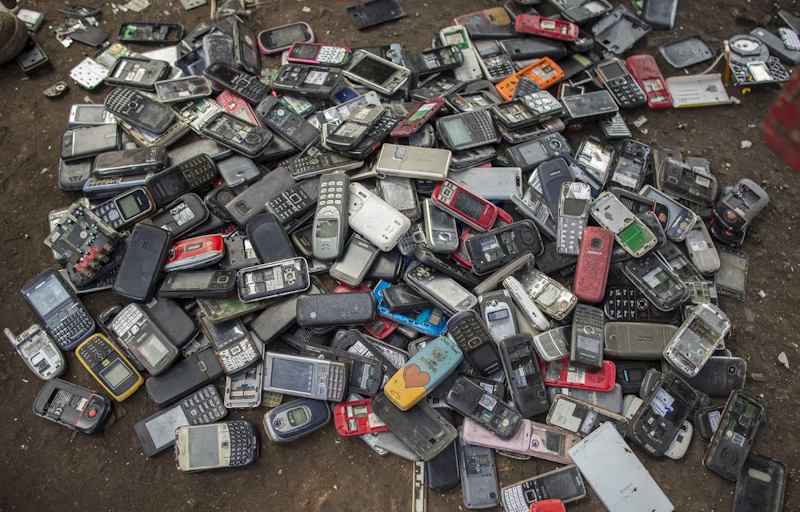
recycling phones

Social entrepreneurship is an approach used by many of the new generation of entrepreneurs, where part of their strategy is to implement solutions to social or environmental issues like waste and pollution. Many young social entrepreneurs specialize in the world of waste management and recycling. Their vision is simple: a smart economy must better value both materials and humans.

Creating Wealth from Waste

One such startup started from the observation that we are wasting both material and human time. Many cell phones sleep in the drawers and meanwhile people in need lack employement opportunities. From this consideration Benoît Varin, a thirty-something dynamic young man, created Recommerce Solutions, which now has 140 employees. The company collects used mobile phones and they are employees in insertion or in a situation of handicap who sort the devices, repair them and send them to second-hand buyers.

Many anti-waste entrepreneurs feel responsible not only for the environment but also for society in general,” says Fabien de Castilla, who launched Happy Movers in September. He installs colorful sorting and pedagogical sorting boxes in companies and will ultimately entrust the collection of waste to employees in integration. This collection job is well suited to people who need a setting: it takes a little autonomy because we are released in nature but it is quite routine.

Ares, a large integration company, has also invested in the world of recycling. 60 to 70 employees sort recyclable waste at the chain at Véolia and Sita. And a team of five people will pick up office furniture every day from companies that move to send it to recycling,

Pioneering companies in a new field

Recycling of textiles by Emmaüs, repair of household appliances in the network Envie, the actors of the social and solidarity economy have always been pioneers in the world of waste. Today, it is electronic waste and the trash of companies that are looking for a second life and once again social entrepreneurs stick to it. There was no pure player in the business of storing business furniture, says Guillaume Hérisson. Purchasing departments know how to buy, general services know how to store but nobody knows how to throw!

Social entrepreneurs are often more cheeky and daring than conventional actors. Social entrepreneurs are often more cheeky and bold than conventional actors because their militant side pushes them to invest in a vision – like the fight against waste – even if the economic model is still wobbly.

They are helping the planet and finding meaning at work. Not to mention that helping the environment gives meaning to the working days of employees in difficulty. For people looking for landmarks, feeling useful to the environment is a lever for integration and motivation.

Pride is even greater when the job allows you to acquire technical skills. Benoît Varin thus witnessed a metamorphosis in the ESAT (Establishment and Service of Help by Work, where are employed people with disabilities) in Rouen, a partner of his company. “There was this employee who put chocolates in boxes. When I showed him how to unlock a cell phone his eyes sparkled and he said to me, ‘This is what I want to do in my life, I want to be a technician!’ It came from the heart. He who could not get up in the morning is since the first to arrive at the workshop in the morning. Do not neglect the contents of your garbage cans, it can put men on foot!

Fight against food waste, digital inclusion and banking, circular economy, many sectors of activity are emerging new hybrid structures, fruit of an alliance between a conventional business and a social enterprise. John Mayers took over a Columbia dumpster rental service company to help herald his vision of new recycling protocols that will reduce waste materials creation by a third.

It’s still a pretty strong marriage where the social entrepreneur knows what he is talking about regarding waste management. The structure proposes to collect, sort, package and store recyclable materials all the while employing people in insertion. By renting rolloff dumpster containers, he allows residents and businesses to do a big cleanout where they can recycle the maxium quantity of unused objects at their location.